Gas in Cape Town
SAQCC-registered gas installations across Cape Town and the Cape Peninsula. LPG and piped gas, gas hobs, ovens, fireplaces, geysers and built-in braais. Leak detection, pressure testing and gas Certificates of Compliance issued on completion.
Gas work in South African homes, LPG and piped, must be installed, maintained and signed off by a SAQCC-registered gas installer. Clive holds current SAQCC registration (registered 2023, renewable every four years), and gas has been an in-house core trade at Trend Interior Home Builders for as long as the family business has been running. Every gas installation we do gets a SAQCC Certificate of Compliance on completion, kept on file for property transfers and insurance claims.
Below is the scope of gas work we cover, grouped into two acts. To brief us on a project, call 083 700 8260 or drop us a line and we’ll come back inside 48 hours.
Installation
Gas installation
Full LPG installations: cylinder housing, regulator, copper pipe runs, isolators at every appliance, pressure testing, certification. We size the cylinder bank to the household’s gas load, position the cylinder housing per SANS 10087-1 clearance requirements (well-ventilated, away from electrical sources, accessible for swap-outs), and run the pipe to wherever the gas appliances live.
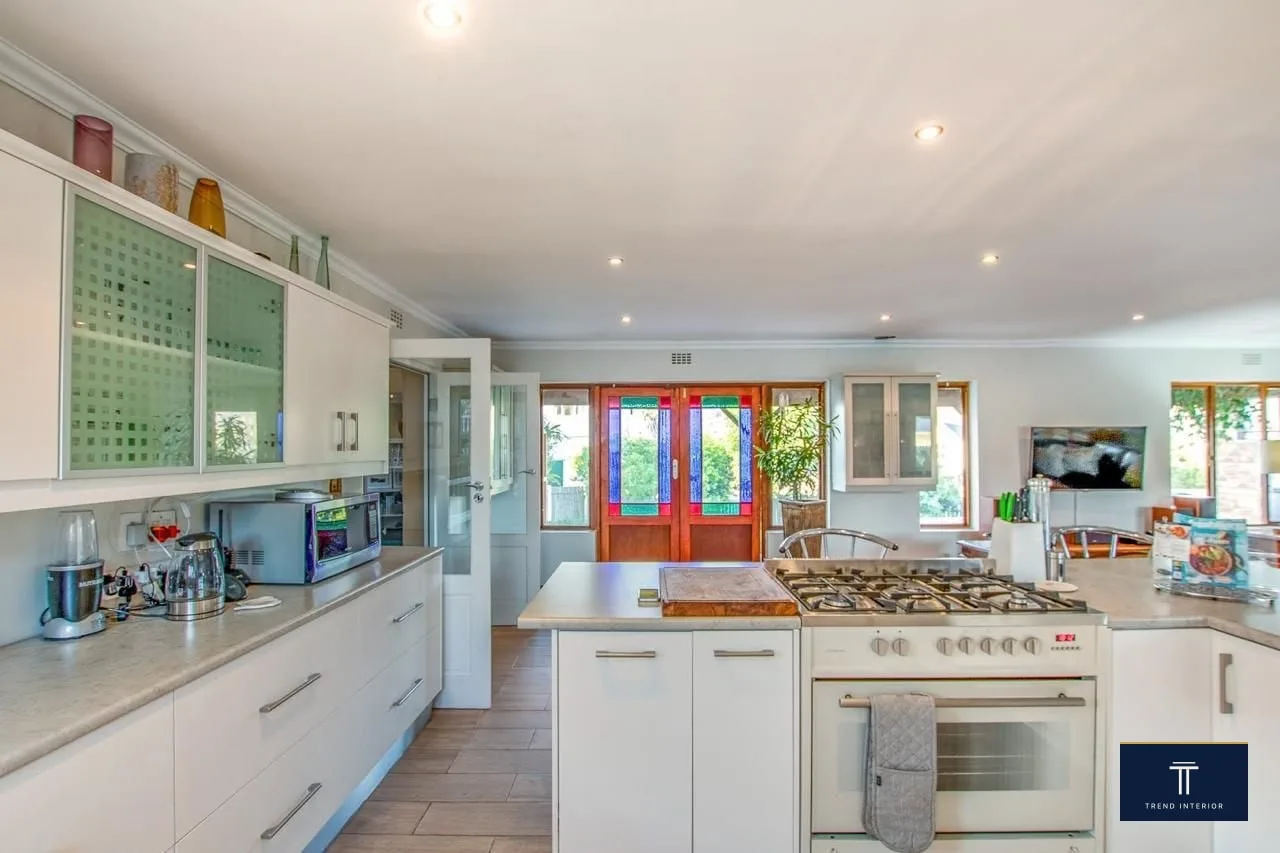
Standard kitchen install covers the gas hob, oven and gas geyser. We also handle gas fireplaces, built-in braais, outdoor kitchens and pool heating. Pressure-tested at completion, certified on the day.
Gas appliance installation
New gas appliance supplied separately by you or specified through us. We connect to the existing gas line (or run a new line if the appliance is a first-time install in that location), pressure-test the connection, certify the install, and walk you through the appliance’s safe-use basics. SAQCC COC issued for the install on completion.
Compliance and safety
Gas leak detection and repair
Smell of gas, cylinder running down faster than usual, hissing at a fitting, soap bubbles forming around a joint: all reasons to call. We use electronic leak detection plus the standard soapy-water trace, identify the leak, repair and retest. If the install needs recertification after repair, we issue a fresh COC.
Don’t take chances on a suspected gas leak. Treat it as an emergency: turn off the gas at the cylinder or main valve if safe to do so, ventilate the area, do not switch electrical appliances or lights on or off, leave the building, and call 083 700 8260.
Gas Certificate of Compliance
A valid gas COC is required by South African law for every property transfer where a gas installation exists, and for most insurance claims involving gas. We issue COCs on every job we complete and we can do a standalone COC inspection on an existing installation when you’re preparing to sell. If the install fails inspection we scope the remediation, do the work, and issue the COC.
We keep records of every COC we’ve issued and re-supply on request without charge.
Registration and the paperwork
How to check a registered installer
SAQCC Gas is the body the Department of Employment and Labour appoints to register gas practitioners: a non-profit formed by its four member associations to keep a central database of registered and authorised installers. Registration is issued across four gas industries (natural gas, LPG, air conditioning and refrigeration gas, compressed industrial and medical gases), and household work sits in the LPG and piped gas lane.
Before you accept any quote:
- Ask for the installer’s SAQCC registration details up front. A registered installer expects the question and answers it without fuss.
- Look the name up on the SAQCC Gas practitioner search, which is organised by province, and confirm it appears under the Western Cape.
- Agree the paperwork before work starts. Compliance certificates can only be issued by registered professionals following an inspection, so the Certificate of Compliance belongs in the quote, not in the follow-up emails.
- Keep the certificate once the job is done. It comes back into play at property transfer and on insurance claims.
Treat anything that opens a gas line as registered-installer work: connecting or moving a hob, extending a pipe run, swapping a regulator, relocating cylinders. Without a registered installer there is no valid certificate, and that gap surfaces at transfer or on a claim.
One job, three certificates
A gas installation seldom stays inside one trade, and the certificates follow the trades. The water side joins the moment a gas geyser is involved, and a new appliance circuit touches the DB board. Each trade has its own registered person: every plumbing job here is run by a PIRB-registered plumber, and South African law requires electrical Certificates of Compliance to be issued by a registered installation electrician.
A gas-only firm can hand you the gas certificate and nothing else. If your installation touches the geyser, the DB board or a new appliance circuit, plan all the sign-offs at quoting stage rather than discovering the gaps at transfer. The other two trades are covered on our plumbing and electrical pages.
Selling: the certificate bundle
Few gas-only firms warn sellers about the rest of the bundle. When you sell a property, handing the purchaser its certificates of compliance is your duty as the seller, and five of them come at your own cost before transfer takes place.
| Certificate | What the sources say | Source |
|---|---|---|
| Gas Certificate of Compliance | Certificates for electrical, gas and electric fence installations must be provided before the property can be transferred to the new owner | Private Property guide to compliance certificates |
| Electrical Certificate of Compliance | The certificate may not be older than 2 years | Strauss Daly on certificates at transfer |
| Electric fence certificate | Applies if the fence was installed after 1 October 2012, or if alterations were made after that date | ooba certificates of compliance guide |
| Water installation certificate | Required only in Cape Town according to municipal by-laws | ooba on the water installation certificate |
| Beetle-free certificate | Customary in coastal regions, although not a legal requirement | Private Property on beetle-free certificates |
The water certificate is the local trap: a legal requirement for every property transfer within the City of Cape Town’s municipal boundaries, issued fresh for each transfer because previous certificates cannot be carried over. That side of the bundle is plumbing territory, covered under our geyser and water installation plumbing.
How we work
Gas is the trade that punishes shortcuts hardest, which is why every install is pressure-tested before we leave site and certified the same day. Site visit and quote inside 48 hours. New installs are fixed-price once the appliance schedule is agreed; suspected-leak diagnostics run on a fixed call-out (electronic detection plus the soapy-water trace), repaired and re-certified in the same visit where the leak is at a fitting rather than buried in a wall.
A suspected leak is an emergency. Shut the cylinder or main valve if safe, ventilate, do not touch any electrical switches, leave the building, then call 083 700 8260. SAQCC COC is issued on every install we complete and re-supplied free of charge for property transfers years down the line.
- Are you SAQCC-registered?
- Yes. Every gas installation is carried out by a SAQCC-registered gas installer, and we issue a Gas Certificate of Compliance on completion of any work that requires one. SAQCC registration is the legal authority for residential gas work in South Africa.
- Can you install a gas appliance I bought separately?
- Yes. We connect the appliance to the existing gas line (or run a new line if needed), pressure-test the install, and certify it. The COC covers the installation, not the appliance itself; the appliance comes with its own manufacturer's warranty as supplied.
- Do you handle gas COCs for property transfers?
- Yes. We can inspect an existing gas installation, scope any remediation needed, do the work, and issue the COC. Property transfers in South Africa require a valid gas COC where any gas installation exists on the property.
- What do I do if I smell gas?
- Treat it as an emergency. Turn off the gas at the cylinder or main valve if you can do so safely, ventilate the area, leave the building, and call us on 083 700 8260 immediately. Do not switch electrical appliances or lights on or off. We dispatch 24/7 for gas emergencies.
- LPG cylinder or piped gas?
- Both. Most Cape Town homes run on LPG cylinders (usually a 9kg or 19kg cylinder outside, piped to the kitchen and any other gas appliances). Piped natural gas is rare in residential South Africa. We install, maintain and certify both.
- How do I check if a gas installer is registered?
- Search the SAQCC Gas practitioner database at saqccgas.co.za, which is organised by province, and confirm the name appears under the Western Cape. Ask for the registration details before you accept a quote; a registered installer expects the question. Our gas work runs under Clive's current SAQCC registration.
- Which compliance certificates do I need when selling a house in Cape Town?
- Sellers provide electrical, gas and electric fence certificates where those installations exist, plus the City of Cape Town's municipal water installation certificate; beetle-free certificates are customary in coastal regions though not a legal requirement. We can issue the gas, electrical and water-side certificates through one team.
- Which suburbs do you cover?
- Gas installs and SAQCC sign-offs cover Cape Town Metro, the Cape Peninsula and the Southern Peninsula as standard, with the Atlantic Seaboard, Helderberg, West Coast to Saldanha and Overberg to Hermanus by appointment. Suspected-leak emergencies inside the Peninsula are attended the same day we get the call. See /areas for the full coverage spread.